
The question “Can Sim Information track a mobile number?” is one of the most common searches today. With increasing concerns about privacy, digital safety, and personal data protection, understanding how Sim Information works has become essential.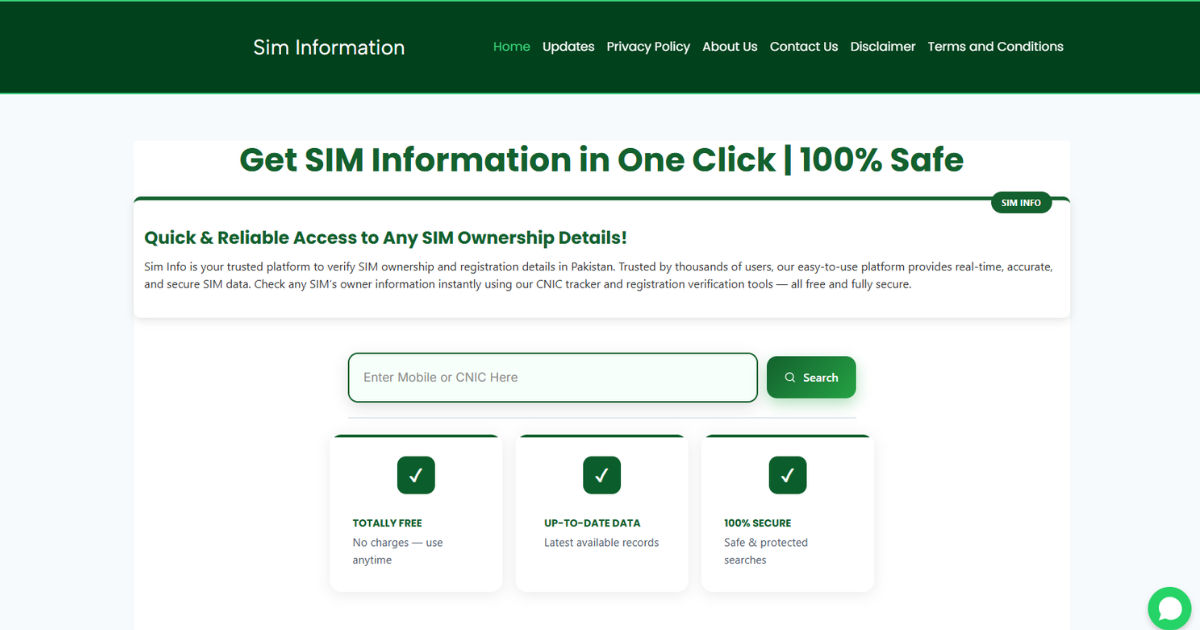
Many people believe that simply knowing the SIM details or Sim Information of a user can reveal their exact location or personal information. Others think that SIM databases provide direct access to call logs, live location, and identity.
But how true are these assumptions?
In this comprehensive guide, we will explore how SIM data works, what information a SIM card holds, what authorities can track, what regular users can and cannot access, and what myths you should stop believing today. If you're looking for a clear, detailed, yet easy-to-understand explanation—this blog post is for you.
What Is Sim Information?
Before answering whether Sim Information can track a mobile number, it’s important to understand what a SIM card actually is. A SIM card (Subscriber Identity Module) is a small chip used in mobile devices that stores essential subscriber information. It identifies the user on a mobile network and allows them to make calls, send messages, and use mobile data.
Every SIM card contains a unique combination of numbers and identifiers. These include:
-
IMSI (International Mobile Subscriber Identity)
-
ICCID (Integrated Circuit Card Identifier)
-
KI (Authentication Key)
-
Phone number
-
Network code
-
Carrier identification
This information is stored securely and used by your mobile network provider to authenticate your identity and connect your phone to the network.
What Exactly Is Sim Information Used For?
Sim Information serves several critical purposes:
Identifying the Subscriber
The SIM card helps the mobile operator recognize who the user is. This ensures the correct billing, service activation, and plan usage.
Connecting to Cellular Networks
When you turn on your phone, the SIM card communicates with nearby cell towers. This process verifies your access to the network.
Enabling Communication
Without a SIM card, traditional calling, texting, and mobile data services would be impossible.
Securing the Network
SIM authentication prevents unauthorized users from accessing the network under someone else’s identity.
So while the SIM has important internal data, the question remains: Can this Sim Information track your mobile number or your location?
Let’s explore.
Can Sim Information Track a Mobile Number?
The short answer: Sim Information itself cannot track a mobile number.
A SIM card does not contain built-in GPS, nor does it automatically reveal exact location details. It only stores subscriber identity, not live tracking data.
However, mobile networks can track devices connected to their towers. This is done using:
-
Cell tower triangulation
-
Network logs
-
IMEI tracking
-
Call detail records
This tracking is not based solely on SIM data—it involves network-level operations. Accessing this information requires:
-
Law enforcement authority
-
Legal warrant
-
Telecom operator permission
Regular users, websites, or apps cannot use Sim Information alone to track a phone number.
What Can Be Tracked Through Mobile Networks?
Although a SIM card itself doesn’t track anything, network operators can monitor several things when the SIM is connected to the phone.
Phone Number Activity
Operators maintain logs of incoming/outgoing calls and SMS.
Cell Tower Location
Your device connects to multiple towers. Operators can estimate your general area.
IMEI and Device ID
Even if you switch SIM cards, the network can still identify your device.
Usage Data
This includes data consumption patterns, active apps, and internet sessions.
Roaming Activity
If you travel internationally, your SIM automatically communicates with networks abroad.
But again—this is controlled by telecom operators, not by public online websites or tools.
What Information Can the SIM Card Not Provide?
To clear up misconceptions, here’s what Sim Information does NOT contain:
-
Live GPS location
-
Browsing history
-
Call recordings
-
Social media messages
-
Exact home address
-
User’s physical identity (unless linked by operator)
These details are not stored on the SIM card.
Websites claiming to reveal such information using only a phone number or SIM ID are misleading.
Are Online Sim Information Tools Safe?
You may have seen websites claiming to show:
-
SIM owner name
-
CNIC details
-
Address
-
Call logs
-
Live location
Most such websites are unsafe or fake.
Many of them:
-
Steal your data
-
Sell your information
-
Install malware
-
Provide outdated or fabricated results
Telecom data is protected by strict privacy laws. No website can legally access it without permission.
How Do Law Enforcement Agencies Track SIM Data?
While regular users cannot track phones with Sim Information, law enforcement does have authorized methods.
1. Tower Dump Records
They request logs from mobile towers in a specific area to identify active devices.
2. CDR (Call Detail Records)
This includes call durations, timestamps, and tower data.
3. IMEI + SIM Tracking
They match device ID with SIM activity for accurate tracing.
4. GPS Data (with mobile location services enabled)
Agencies can request app-based or OS-level location logs.
5. Geo-fencing
A virtual perimeter is tracked for device movement.
Tracking is done only in:
-
Criminal investigations
-
Emergency cases
-
Missing person situations
-
Fraud identification
This tracking is legal and controlled, unlike random “Sim Information” lookup sites.
Can You Track Your Lost Phone Using Sim Information?
Not directly.
But you can use the SIM card’s network connectivity to assist tracking through:
Find My Device (Android)
Requires Google account and internet connection.
Find My iPhone (iOS)
Tracks location, plays sound, locks device remotely.
IMEI-based tracking
Your mobile carrier can help if you provide the device’s IMEI.
Blocking the SIM
If your phone is stolen, the first step is to block the SIM card. This prevents misuse and unauthorized activity.
Sim Information does not directly track your phone but assists network systems in identifying the device.
Myths About Sim Information Tracking
Let’s clear common misconceptions.
Myth 1: Anyone Can Track Your Location via SIM
False. Only mobile operators and law enforcement with legal permission can access such data.
Myth 2: SIM Cards Store Live Location
They only store identity data—not GPS coordinates.
Myth 3: Online Sim Information Tools Are Accurate
Most are fake. Telecom data is private.
Myth 4: Switching SIM Cards Prevents Tracking
Your device can be tracked via IMEI, even without the SIM.
Myth 5: SIM Card Stores Call Recordings
Call recordings are not stored on the SIM. They may be stored on the device or cloud apps.
Why Sim Information Matters for Safety and Security
Understanding how Sim Information works helps protect your privacy. Identity theft, fraud, SIM cloning, and scam calls are rising. Knowing what can and cannot be accessed empowers users.
Helps Prevent SIM Swapping
Attackers attempt to get a new SIM issued in your name. Knowing the importance of SIM data helps you secure it.
Protects Privacy
You’ll avoid fake sites asking for your number or CNIC.
Increases Awareness
You become more cautious about sharing mobile numbers publicly.
How Hackers Try to Exploit SIM Data
Cybercriminals use various methods:
SIM Card Cloning
Copying SIM identity to another card. Rare but possible.
Social Engineering
Tricking users into sharing OTPs or SIM details.
Fake Sim Information Apps
Collecting personal data illegally.
Spyware Installation
If physical access to device is gained, spyware can track activities.
Being aware of such risks helps prevent falling victim to fraud.
What Information Can Be Recovered from a SIM?
Here’s what can typically be extracted from a SIM card:
-
Saved contacts (if stored on SIM)
-
Text messages (limited capacity)
-
Service provider information
-
Network codes
-
Authentication keys
But nothing beyond that.
Modern smartphones store most data internally or on the cloud—not on the SIM.
How Telecom Companies Protect Sim Information
Telecom carriers operate under strict data privacy policies. They protect SIM data using:
Encryption
SIM authentication is encrypted and constantly evolving.
Multi-layer Verification
Includes biometrics, PIN codes, CNIC verification.
Network Monitoring
Suspicious activities are flagged.
Secure Databases
Subscriber data is stored in protected servers.
Two-Factor Authentication
Most SIM replacements require biometric verification.
These measures ensure that Sim Information remains safe and private.
Legal Framework Around SIM Tracking
Different countries enforce strict laws:
Data Protection Laws
Telecoms cannot share subscriber information without consent.
Telecom Regulations
Every SIM card must be registered legally.
Crime Investigation Protocols
Police require warrants for SIM or phone tracking.
Anti-Terrorism Guidelines
SIM misuse can result in criminal charges.
Understanding these laws highlights why Sim Information cannot be used casually for tracking.
How to Protect Your SIM From Misuse
Here are essential tips:
Use a SIM PIN
Set a PIN so no one can access the SIM if removed.
Avoid Sharing Personal Info
Never share SIM numbers, CNIC, IMEI, or OTP.
Keep Your Device Locked
Use fingerprint or strong password authentication.
Check for Unauthorized SIMs
Use official apps to verify registered SIM cards under your identity.
Report Lost Devices
Notify your carrier immediately if your phone is stolen.
Avoid Public Wi-Fi
Hackers may attempt network-level attacks.
These steps ensure your Sim Information stays secure.
How Does Sim Information Help Identify a User?
Even though SIM data cannot track you directly, it plays a critical role in identity verification:
-
Confirms subscriber name
-
Matches CNIC with telecom records
-
Associates device with number
-
Helps in legal investigations
-
Prevents fraudulent SIM use
It acts as a digital identity card for mobile communication.
Can Sim Information Track Someone Without Consent?
No.
Tracking without consent is illegal. Telecom data is confidential and secured by privacy laws. Unauthorized access may lead to:
-
Fines
-
Imprisonment
-
Legal consequences for both providers and individuals
Even mobile operators follow strict protocols before sharing any data.
What Should You Do If You Suspect SIM Misuse?
Follow these steps immediately:
-
Contact your mobile operator
-
Block your SIM
-
Request activity logs
-
Change passwords of linked accounts
-
Check SIMs registered under your identity
-
Report to authorities if needed
Early action can prevent financial and identity theft.
Conclusion
So, can Sim Information track a mobile number?
No—Sim Information alone cannot track any device or reveal live location.
A SIM card only stores basic subscriber identity data. It does not contain GPS or tracking capabilities. Only mobile network operators and law enforcement—with legal authorization—can trace a phone using advanced network systems, IMEI logs, and tower data.
Most online SIM lookup tools claiming to provide names, addresses, or live tracking are either inaccurate, unsafe, or illegal. Your personal data is protected under strict telecom and privacy regulations. While understanding SIM data is important for safety, it’s equally crucial to avoid sharing sensitive information and to stay aware of scams and misleading websites.
By learning how Sim Information works, you can better protect yourself from fraud, secure your identity, and understand what is and isn't possible when it comes to SIM-based tracking.
